
How Global Conflicts Are Rerouting Ships and Driving Up Costs
How Global Conflicts Are Rerouting Ships and Driving Up Costs – Insights from Uneek Forwarding: In today’s interconnected world, global shipping depends on stability across key trade routes. But recent conflicts and geopolitical tensions are reshaping how goods move around the world, forcing vessels to take longer routes, increasing operational costs, and creating new challenges for businesses that rely on timely delivery.
At Uneek Forwarding, we’re seeing first-hand how these disruptions are impacting Freight Forwarding and Supply Chains and what businesses can do to stay ahead.
Why Are Ships Being Rerouted?
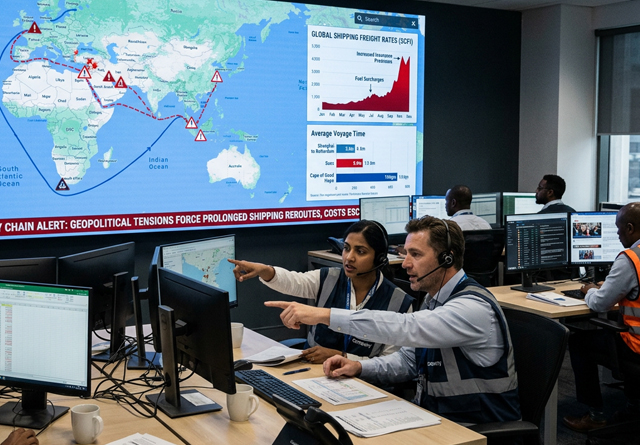
Major shipping lanes pass through strategic chokepoints such as the Suez Canal and key Middle Eastern waterways. When conflict arises in or around these regions, carriers are forced to prioritise safety over efficiency.
This often leads to:
- Ships avoiding high-risk zones entirely
- Longer routes around continents (e.g., via the Cape of Good Hope)
- Increased congestion in alternative ports
While these decisions are necessary, they significantly extend transit times, sometimes by weeks.
The Real Cost of Rerouting
Rerouting doesn’t just mean longer journeys – it has a direct financial impact across the entire supply chain.
Key cost drivers include:
- Fuel consumption: Longer distances mean higher fuel usage
- Insurance premiums: War risk surcharges increase in unstable regions
- Port fees: Additional stops or congestion charges
- Equipment imbalances: Containers end up in the wrong places, creating shortages elsewhere
These factors combine to push freight rates higher, often with little notice.
Impact on Businesses
For importers and exporters, the effects can be significant:
- Delayed shipments and missed deadlines
- Increased landed costs affecting margins
- Difficulty forecasting delivery times
- Strain on inventory planning
For industries relying on just-in-time logistics, even minor delays can cause major disruption.
Adapting to a New Shipping Reality
Geopolitical uncertainty is no longer a rare occurrence – it’s becoming part of everyday logistics planning. Businesses must now build resilience into their supply chains.
Strategies to consider:
- Diversify routes and suppliers to reduce dependency on single corridors
- Increase inventory buffers for critical goods
- Use real-time tracking and data insights to respond quickly to disruptions
- Work with experienced freight partners who can adapt routing strategies efficiently
How Uneek Forwarding Can Help
At Uneek Forwarding, we understand that flexibility is key in today’s volatile environment. Our team continuously monitors global developments to proactively adjust shipping strategies and minimise disruption.
We offer:
- Dynamic routing solutions
- Transparent cost breakdowns
- Up-to-date market insights
- End-to-end logistics support
Our goal is simple: keep your cargo moving, no matter the circumstances.
Looking Ahead
While global conflicts may continue to influence shipping routes, businesses that stay informed and adaptable will be best positioned to succeed.
The logistics landscape is changing – but with the right partner, it’s still possible to navigate it with confidence.
Need support navigating today’s shipping challenges? Get in touch with Uneek Forwarding to explore tailored logistics solutions for your business.
About this Blog
Address: Uneek House, Amberley Way, Hounslow, Middlesex, TW4 6BH
Call: +44 (0) 20 8569 4949
Website: www.uneek-group.com
Blog Title: How Global Conflicts Are Rerouting Ships and Driving Up Costs
Blog Author: Mark Watts
